
Ryan Gosling's Zero-G Stunts in 'Project Hail Mary' Explained
Key Takeaways
- VFX supervisors Paul Lambert and Mag Sarnowska discussed 'Project Hail Mary' at the View Conference.
- Ryan Gosling performed his own zero-G stunts using complex wire rigs and rotating harnesses.
- Cinematographer Greig Fraser used infrared cameras and practical water effects for unique imagery.
- Practical elements like fireballs and ferrofluid were filmed to guide digital microscopic effects.
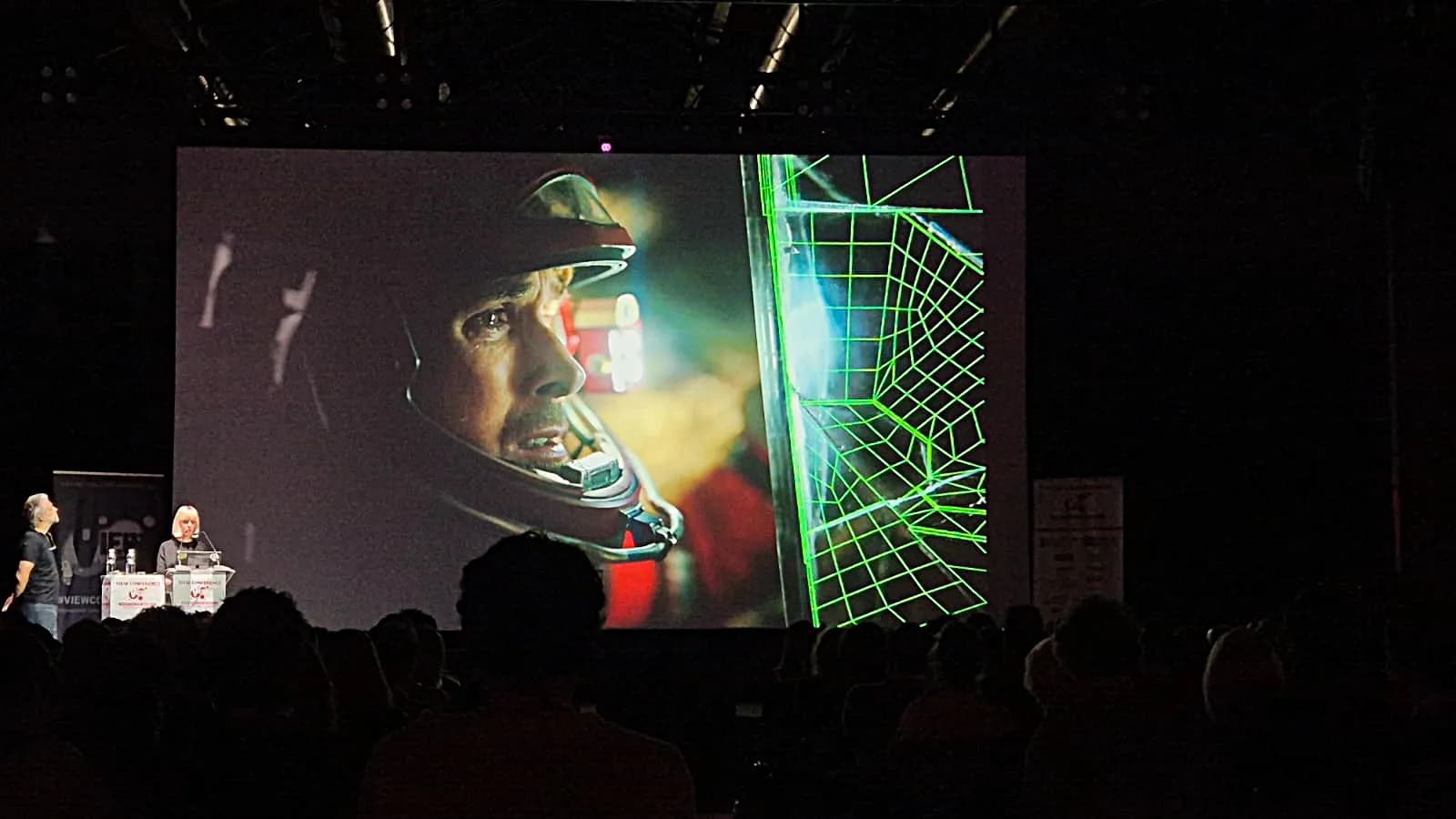
Creating convincing zero gravity for a major motion picture is one of the most difficult tasks in modern visual effects. For Oscar-winning visual effects supervisor Paul Lambert, tackling this challenge in the Ryan Gosling space epic "Project Hail Mary" was his primary concern heading into the production. Speaking at the View Conference in Turin, Italy, Lambert detailed the extensive efforts required to bring the cosmic adventure to life on screen.
The production team initially considered using parabolic aircraft flights, commonly known as the "vomit comet," to achieve brief periods of authentic weightlessness. However, the spacecraft sets built for the film were simply too elaborate and physically constrained to be recreated inside an aircraft. Consequently, the filmmakers had to rely on elaborate wire rigs and a specialized rotating harness to suspend Gosling during his demanding performance.
Simply hanging an actor from wires, however, rarely looks like true weightlessness. To fix the common visual cue where a suspended body appears pulled down by gravity, visual effects artists meticulously adjusted the positions of Gosling's legs, arms, and torso during post-production. They also added drifting background objects to reinforce the psychological illusion that the actor was indeed floating freely in space. Lambert noted that Gosling was deeply committed to doing his own physical stunts, including complex spacewalk sequences.
Beyond wirework, the visual effects team collaborated closely with cinematographer Greig Fraser to push the boundaries of practical photography. Fraser utilized an infrared-modified camera alongside programmable infrared lights and flowing water directly in front of the lens to capture unusual, striking imagery. Lambert described the process as resembling a "mad science lab" due to the heavy reliance on practical experiments.
To build realistic microscopic and cosmic effects, the crew also filmed physical elements like burning fireballs, interacting liquids, lasers, and ferrofluid. These practical tests served as foundational references for digital artists. Later in the post-production phase, Fraser returned to work alongside the visual effects team at ILM, utilizing advanced virtual-camera systems to complete the stunning visual tapestry of the film.
Ultimately, the combination of rigorous physical wirework, practical optical experiments, and meticulous digital cleanup allowed the filmmakers to overcome the immense hurdles of depicting zero-G. The resulting visual language of "Project Hail Mary" promises to deliver an immersive cinematic experience that respects the realities of space travel while showcasing cutting-edge modern filmmaking techniques.
Recommended for you
Tools and services we trust to boost productivity and content workflows.
Browse picks