
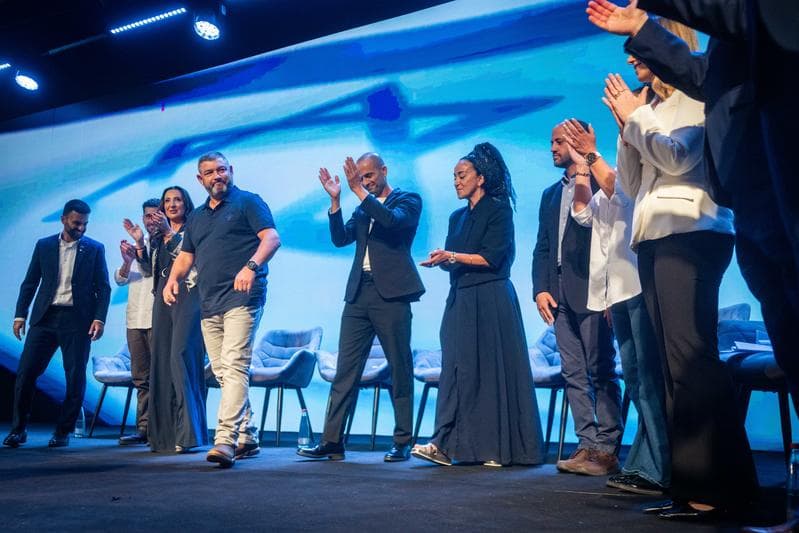
David Ben Zion Reflects on Resigning from Amch Yisrael Party
🤖 This content was generated and summarized with AI assistance based on the linked source — it is not a substitute for the original or professional advice.
Original source:srugim.co.il
Key Takeaways
- David Ben Zion resigned from 'Amch Yisrael' just a week after joining.
- He cited concerns over the electoral threshold and a harsh political campaign.
- The political pressure also impacted his family life and personal sphere.
- He refrained from advising Ofer Winter on whether to quit the race.
The landscape of Israeli politics often moves at a breakneck pace, where alliances form and fracture within weeks. Recently, the political sphere experienced a notable tremor when David Ben Zion, a prominent figure in the Samaria Regional Council, announced his resignation from the newly formed 'Amch Yisrael' party. Spearheaded by former senior military officer Ofer Winter, the party had positioned itself as a fresh voice on the right-wing spectrum. However, just a week after joining forces with the movement, Ben Zion decided to cut ties, citing insurmountable circumstances that rendered his continued presence counterproductive.
During an extensive interview on public radio, Ben Zion elaborated on the complex considerations that forced his hand. As a man of action who prides himself on pragmatic governance and public service, he evaluated whether he could effectively champion his core values within the faction. One of the dominant factors in his calculus was the looming shadow of the electoral threshold. The persistent fear that ballots cast for the party might ultimately go to waste created a profound dilemma. Recognizing that he could not guarantee the realization of his political platform under these uncertain conditions, he chose responsibility over blind loyalty.
Furthermore, Ben Zion candidly admitted to a significant miscalculation regarding the public reception of the party. He confessed that he had severely underestimated the magnitude and ferocity of the political campaign directed against them. Anticipating a much stronger showing in early polls, he was surprised by the hostile political climate. Rather than coasting into a secure electoral position, the party found itself navigating a turbulent storm of criticism, public scrutiny, and targeted opposition that fundamentally altered the feasibility of their campaign.
Beyond the macro-level polling data and strategic miscalculations, the political arena exacted a personal toll. Ben Zion recounted the pressures he faced locally, including critical signs posted in his own residential community. While acknowledging that public figures must accept the rough-and-tumble nature of political rivalry—akin to stepping out into the rain without an umbrella—he noted the collateral impact on his loved ones. The discomfort extended to his wife's workplace, where colleagues raised questions and comments, highlighting the very real human cost of high-stakes political participation.
Concluding his remarks, Ben Zion was careful to draw a boundary between his personal choices and the future of his former running mate. When pressed by interviewers on whether Ofer Winter should similarly abandon the electoral race, Ben Zion firmly declined to offer direction. Describing Winter as a serious and capable individual, he emphasized that every leader must bear the weight of their own decisions. For Ben Zion, the chapter with 'Amch Yisrael' is firmly closed, leaving him to refocus his energies on his foundational responsibilities within the Samaria Regional Council.
Want to go deeper?
Join an interactive study discussion — ask questions, challenge, and explore.
Recommended for you
Tools and services we trust to boost productivity and content workflows.
Browse picks